Tag: Jobs in United States

  • Updated Guide to Get Healthcare Jobs in the United States for Nurses and Medical Assistants

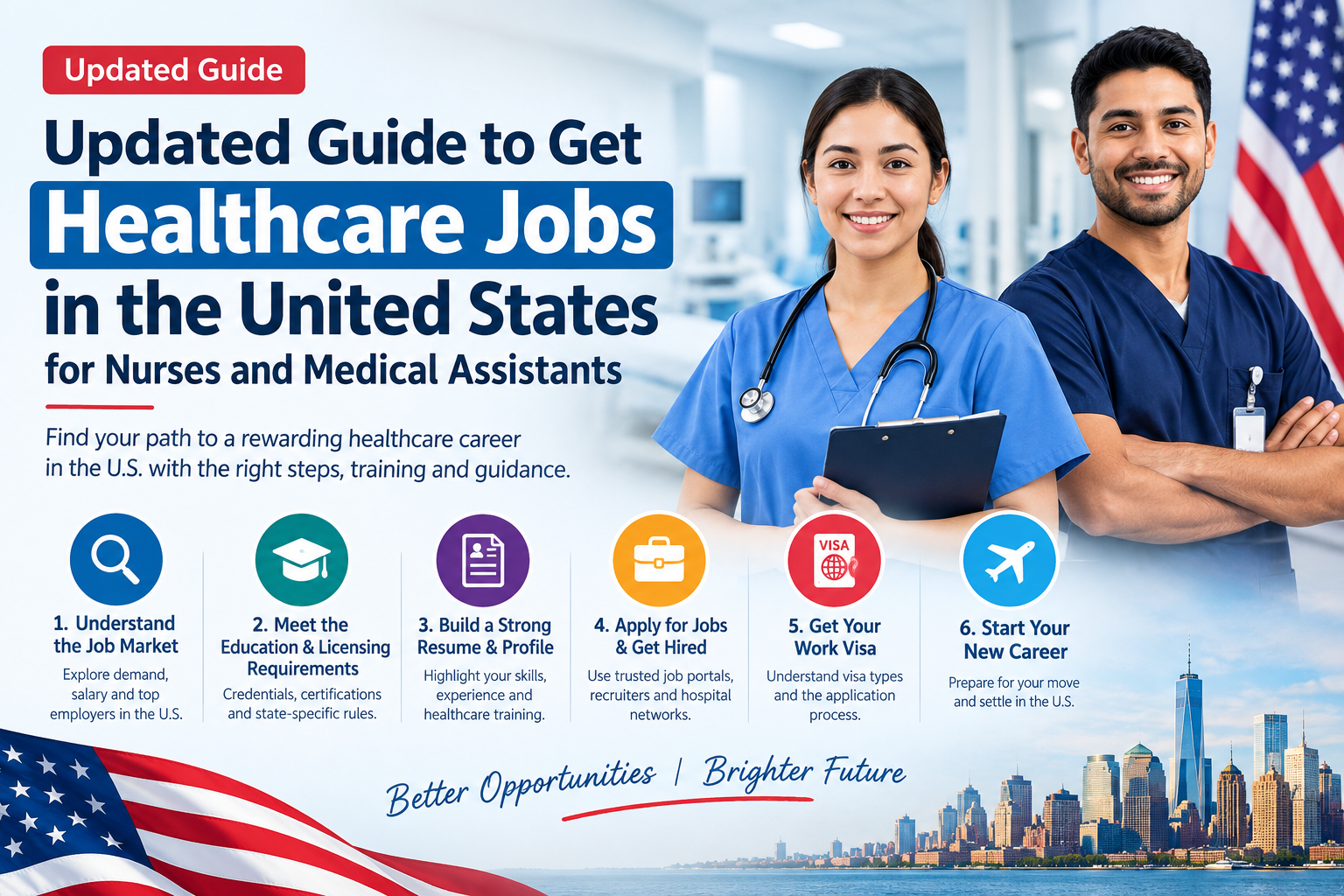
    Updated Guide to Get Healthcare Jobs in the United States for Nurses and Medical Assistants

    The healthcare industry in the United States provides employment opportunities for millions of professionals, including registered nurses, licensed practical nurses, nursing assistants, medical assistants, and other healthcare workers. For international professionals, working in the United States can be an attractive career option, but getting a healthcare job requires more than simply submitting a resume.

    Nurses generally need to satisfy U.S. state licensing requirements before practicing as nurses, while medical assistants have different education and certification requirements. International healthcare professionals may also need credential evaluations, English-language testing, examinations, and appropriate U.S. work authorization depending on their occupation and circumstances.

    This updated guide explains how nurses and medical assistants can search for healthcare jobs in the United States, understand the qualification process, prepare for employment, and learn about possible work-visa pathways.

    Important: U.S. healthcare licensing and immigration requirements vary by occupation, state, employer, and individual circumstances. Always verify current requirements with the relevant state licensing board, USCIS, U.S. Department of State, and other official organizations before making immigration or employment decisions.

    Healthcare Jobs in the United States

    Healthcare is one of the largest employment sectors in the United States. Hospitals, physician offices, outpatient facilities, nursing facilities, home healthcare organizations, and other healthcare providers employ professionals in a wide range of positions.

    Two occupations that attract significant interest are registered nurses (RNs) and medical assistants (MAs).

    According to the U.S. Bureau of Labor Statistics (BLS), registered nurses had about 3.47 million jobs in 2025, and employment is projected to grow by 6% from 2025 to 2035. The BLS projects approximately 180,800 openings per year for registered nurses over that period.

    Medical assistants had approximately 833,900 jobs in 2025, with employment projected to grow 13% from 2025 to 2035, considerably faster than the average for all occupations. The BLS projects approximately 109,700 medical-assistant openings per year during that period.

    These figures do not guarantee employment for an individual applicant, but they provide useful information about the overall U.S. employment outlook.

    How to Get a Nursing Job in the United States

    International nurses generally need to complete several steps before they can legally practice as nurses in the United States.

    1. Complete Nursing Education

    The first requirement is an appropriate nursing education.

    Registered nurses in the United States commonly enter the profession through:

    • A bachelor’s degree in nursing
    • An associate degree in nursing
    • A diploma from an approved nursing program

    Registered nurses must be licensed.

    Internationally educated nurses should have their academic and professional credentials reviewed according to the requirements of the state where they want to practice.

    2. Identify the State Where You Want to Work

    Nursing is regulated at the state level. This means requirements can differ from one state to another.

    Before applying for jobs, an international nurse should identify the state where they intend to work and review the requirements of that state’s nursing regulatory authority.

    Requirements may include:

    • Educational evaluation
    • Credential verification
    • English-language proficiency
    • Nursing examination
    • Background checks
    • Fingerprinting
    • State-specific documentation
    • Application fees

    Because requirements can change, candidates should always check the current instructions from the relevant state board of nursing.

    3. Pass the NCLEX-RN

    For candidates seeking registered-nurse licensure, the NCLEX-RN is an important part of the U.S. nursing licensure process.

    Internationally educated nurses should first determine whether they meet the eligibility requirements established by the nursing regulatory authority where they want to obtain licensure.

    Passing the NCLEX-RN does not by itself provide immigration status or automatically authorize employment. Licensing and immigration are separate processes.

    4. Complete Credential Evaluation

    International nurses may need to provide academic records and professional documents for evaluation.

    Organizations such as CGFNS International provide credential evaluation and related services for internationally educated healthcare professionals.

    The exact evaluation requirements depend on the state, occupation, employer, and immigration pathway.

    English-Language Requirements for International Nurses

    English proficiency may be part of the licensing or immigration process for internationally educated nurses.

    Depending on the applicable pathway, applicants may be asked to provide evidence through an approved English-language examination or another accepted method.

    Do not assume that one English test is accepted everywhere. Requirements can vary depending on the state board, licensing route, and immigration process.

    Before paying for an examination, check the current requirements for your specific pathway.

    VisaScreen for International Healthcare Professionals

    Some internationally educated healthcare professionals seeking certain occupational visas may need a VisaScreen: Visa Credentials Assessment.

    CGFNS states that VisaScreen is a comprehensive screening service for healthcare professionals seeking an occupational visa in the United States. The program covers certain healthcare professions, including registered nurses and licensed practical/vocational nurses.

    For registered nurses, CGFNS states that evidence of passing the NCLEX-RN or the CGFNS Qualifying Exam can satisfy the nursing knowledge examination component of VisaScreen.

    VisaScreen is a credential-screening process; it is not itself a U.S. work visa. Candidates should determine which immigration category applies to their circumstances.

    Nursing Jobs Available in the United States

    Nurses can work in many different healthcare environments.

    Examples include:

    • Hospitals
    • Emergency departments
    • Intensive care units
    • Outpatient clinics
    • Physician offices
    • Nursing facilities
    • Home healthcare
    • Schools
    • Rehabilitation facilities
    • Community healthcare
    • Specialty clinics

    Registered nurses can also specialize in areas such as:

    • Critical care
    • Oncology
    • Pediatrics
    • Cardiology
    • Emergency nursing
    • Mental health
    • Geriatric nursing
    • Surgical nursing
    • Public health

    The work environment and qualifications can vary significantly between positions.

    Registered Nurse Salary and Job Outlook

    According to the BLS, the median annual wage for registered nurses was $97,550 in May 2025, although actual compensation varies by location, experience, employer, specialty, and work setting.

    The BLS projects 6% employment growth for registered nurses between 2025 and 2035. It also expects approximately 180,800 openings per year during that period.

    Salary should therefore be evaluated together with factors such as:

    • State and city
    • Cost of living
    • Shift schedule
    • Specialty
    • Experience
    • Employer
    • Benefits
    • Overtime opportunities

    How to Get a Medical Assistant Job in the United States

    Medical assistants perform both administrative and clinical tasks in healthcare settings.

    Typical responsibilities can include:

    • Scheduling appointments
    • Recording patient information
    • Taking vital signs
    • Preparing examination rooms
    • Updating medical records
    • Assisting healthcare professionals
    • Collecting patient information
    • Handling administrative tasks

    The exact responsibilities depend on the employer and state requirements.

    According to the BLS, medical assistants typically need postsecondary education such as a certificate, although some people enter the occupation with a high school diploma and receive on-the-job training.

    Medical Assistant Certification

    Certification can strengthen a medical assistant’s professional profile, although requirements differ by employer and state.

    Candidates should research certifications recognized by employers in the state where they want to work.

    A medical assistant may benefit from training in areas such as:

    • Medical terminology
    • Patient care
    • Basic clinical procedures
    • Medical records
    • Healthcare administration
    • Anatomy and physiology
    • Infection control
    • Communication skills

    Hands-on training or a supervised practicum can also help candidates develop practical skills.

    Medical Assistant Salary and Job Outlook

    The BLS reported a median annual wage of $45,690 for medical assistants in May 2025. The actual salary depends on factors such as location, experience, employer, and healthcare setting.

    Medical assistant employment is projected to grow by 13% between 2025 and 2035, with approximately 109,700 openings per year projected over the decade.

    Medical assistants commonly work in:

    • Physician offices
    • Hospitals
    • Outpatient care centers
    • Specialty medical offices
    • Other healthcare facilities

    The BLS reports that physician offices employed the largest share of medical assistants in 2025.

    Can Medical Assistants Get U.S. Visa Sponsorship?

    This is an important distinction for international applicants.

    Having a healthcare-related qualification does not automatically mean that an occupation qualifies for a particular U.S. employment visa.

    Medical assistants should not assume that an employer offering a job will automatically be able to sponsor a work visa.

    Visa eligibility depends on the specific immigration category and its requirements, including the nature of the position, qualifications, employer circumstances, and other factors.

    For this reason, international medical assistants should research both:

    1. Whether they qualify to perform the occupation in the target state, and
    2. Whether an appropriate immigration pathway exists for their circumstances.

    These are separate questions.

    Work Visa Information for Nurses

    Nurses may encounter different immigration pathways depending on their qualifications, employer, nationality, and circumstances.

    Employment-based immigration can involve employer sponsorship and other requirements. Some foreign healthcare professionals may also need occupational credential screening.

    For certain healthcare occupations, VisaScreen can be an important part of the process. CGFNS identifies registered nurses and licensed practical/vocational nurses among the healthcare professions covered by its VisaScreen service.

    Nurses should not choose a visa category solely because another healthcare professional used it. The correct pathway depends on the individual’s circumstances.

    For immigration matters, consulting a qualified U.S. immigration attorney can be useful.

    How to Find Healthcare Jobs With Visa Sponsorship

    International healthcare professionals can use several strategies to find potential employers.

    Search Employer Career Pages

    Large hospitals and healthcare organizations often publish vacancies on their own career websites.

    Search for terms such as:

    • Nurse visa sponsorship
    • Registered nurse sponsorship
    • International nurse jobs
    • Foreign nurse jobs USA
    • Healthcare visa sponsorship
    • Internationally educated nurse jobs

    Use Job Search Websites

    You can also search major employment websites using combinations such as:

    Registered Nurse + visa sponsorship

    International Nurse + USA

    Medical Assistant + sponsorship

    However, always verify the information directly with the employer.

    Contact Recruiters

    Some healthcare recruitment companies work with international healthcare professionals.

    Before signing any agreement, carefully review:

    • Recruitment fees
    • Contract terms
    • Salary
    • Location
    • Housing arrangements
    • Travel arrangements
    • Visa responsibilities
    • Repayment clauses
    • Employment conditions

    Avoid organizations that promise a guaranteed visa or guaranteed employment in exchange for money.

    Prepare a Strong Healthcare Resume

    Your resume should clearly explain your qualifications and experience.

    For nurses, include:

    • Nursing degree
    • Nursing license
    • NCLEX status
    • Clinical experience
    • Nursing specialties
    • Certifications
    • Hospital experience
    • Professional achievements

    For medical assistants, include:

    • Education
    • Medical assistant training
    • Certifications
    • Clinical experience
    • Administrative experience
    • Electronic health record experience
    • Patient-care skills

    Keep the resume professional and easy to read.

    Documents International Applicants Should Prepare

    Depending on the position and immigration pathway, you may need documents such as:

    • Passport
    • Educational certificates
    • Academic transcripts
    • Nursing license
    • Employment verification letters
    • Professional certificates
    • English-language test results
    • Examination results
    • Credential evaluation
    • Background-check documents
    • Resume
    • Job offer documents
    • Immigration paperwork

    Keep digital copies of important documents and make sure names and dates are consistent across your records.

    How to Avoid Healthcare Job Scams

    International healthcare workers can be targeted by fake recruiters and fraudulent job offers.

    Be cautious if a recruiter:

    • Guarantees a U.S. visa
    • Guarantees a job without an interview
    • Requests unusually large upfront payments
    • Uses an unofficial email address
    • Refuses to provide a written employment contract
    • Gives unclear salary information
    • Asks you to send money to a personal account
    • Promises permanent residency immediately

    A legitimate employment opportunity should provide clear information about the employer, position, compensation, responsibilities, and relevant immigration process.

    You should independently verify the employer and immigration information before making payments or signing contracts.

    Step-by-Step Plan for International Healthcare Workers

    If you are outside the United States and want to pursue a healthcare career there, the following process can help you organize your plans:

    Step 1: Choose Your Occupation

    Determine whether you want to work as a registered nurse, licensed practical/vocational nurse, medical assistant, or another healthcare professional.

    Step 2: Choose Your State

    Research licensing and employment requirements in the state where you want to work.

    Step 3: Evaluate Your Credentials

    Determine whether your education and professional credentials meet the relevant requirements.

    Step 4: Complete Required Exams

    Nurses may need to complete the NCLEX or other applicable examinations depending on their pathway.

    Step 5: Complete Licensing Requirements

    Apply through the appropriate state licensing authority.

    Step 6: Prepare Your Resume

    Create a U.S.-style healthcare resume highlighting your qualifications and experience.

    Step 7: Search for Employers

    Target hospitals, clinics, healthcare organizations, and other employers that match your qualifications.

    Step 8: Confirm Sponsorship

    If you require immigration sponsorship, confirm whether the employer supports the relevant pathway.

    Step 9: Complete Immigration Procedures

    Follow the applicable immigration and visa process after receiving an appropriate employment opportunity.

    Step 10: Maintain Your Credentials

    After obtaining employment, keep licenses, certifications, and other professional requirements current.

    Frequently Asked Questions

    Can an international nurse work in the United States?

    Yes. International nurses can work in the United States if they meet the applicable state nursing-licensure requirements and obtain the appropriate employment authorization or immigration status.

    Do nurses need to pass the NCLEX?

    Registered nurses seeking U.S. licensure generally need to satisfy the requirements established by the relevant nursing regulatory authority, which commonly includes the NCLEX-RN.

    Can a medical assistant work in the USA without a nursing license?

    Medical assistants are a separate occupation from registered nurses. They do not generally need an RN license to perform medical-assistant duties, but state and employer requirements can vary. The BLS notes that medical assistants typically need postsecondary education such as a certificate, while some enter through on-the-job training.

    What is VisaScreen?

    VisaScreen is a healthcare-professional credential screening service. CGFNS states that it is designed for healthcare professionals seeking an occupational visa and covers certain professions, including registered nurses and licensed practical/vocational nurses.

    Is there a guaranteed U.S. healthcare job for foreign workers?

    No. Employment depends on employer requirements, professional qualifications, licensing, immigration eligibility, and the availability of suitable positions.

    Can I apply for U.S. healthcare jobs from another country?

    Yes. International candidates can apply to U.S. employers from abroad. However, they must complete the applicable licensing and immigration requirements before beginning employment.

    Final Thoughts

    The United States offers a wide range of healthcare employment opportunities for qualified professionals. Registered nursing and medical assisting are two different career paths, with different education, licensing, certification, and immigration considerations.

    For nurses, obtaining the appropriate state license and meeting examination and credential requirements are important steps. International nurses may also need credential screening such as VisaScreen depending on their immigration pathway.

    Medical assistants have a different qualification structure and typically work in physician offices, hospitals, outpatient facilities, and other healthcare environments.

    The most important step for international applicants is to separate professional licensing from immigration authorization. Getting qualified for a healthcare occupation does not automatically provide permission to work in the United States.

    Before accepting a job or paying a recruiter, verify the employer, understand the contract, confirm the licensing requirements for your state, and check current U.S. immigration information through official government sources.

    With proper preparation, accurate documentation, relevant professional experience, and a clear understanding of the licensing and immigration process, healthcare professionals can make their U.S. job search more organized and informed.

    Disclaimer: This article is for general informational purposes only and does not constitute legal, immigration, medical, or professional licensing advice. U.S. licensing and immigration rules can change, and requirements vary by state and individual circumstances. Always verify current requirements with the relevant state licensing authority, USCIS, the U.S. Department of State, and other official sources.
  • Full Guide to Get Skilled Worker Jobs in the United States With Work Visa Information

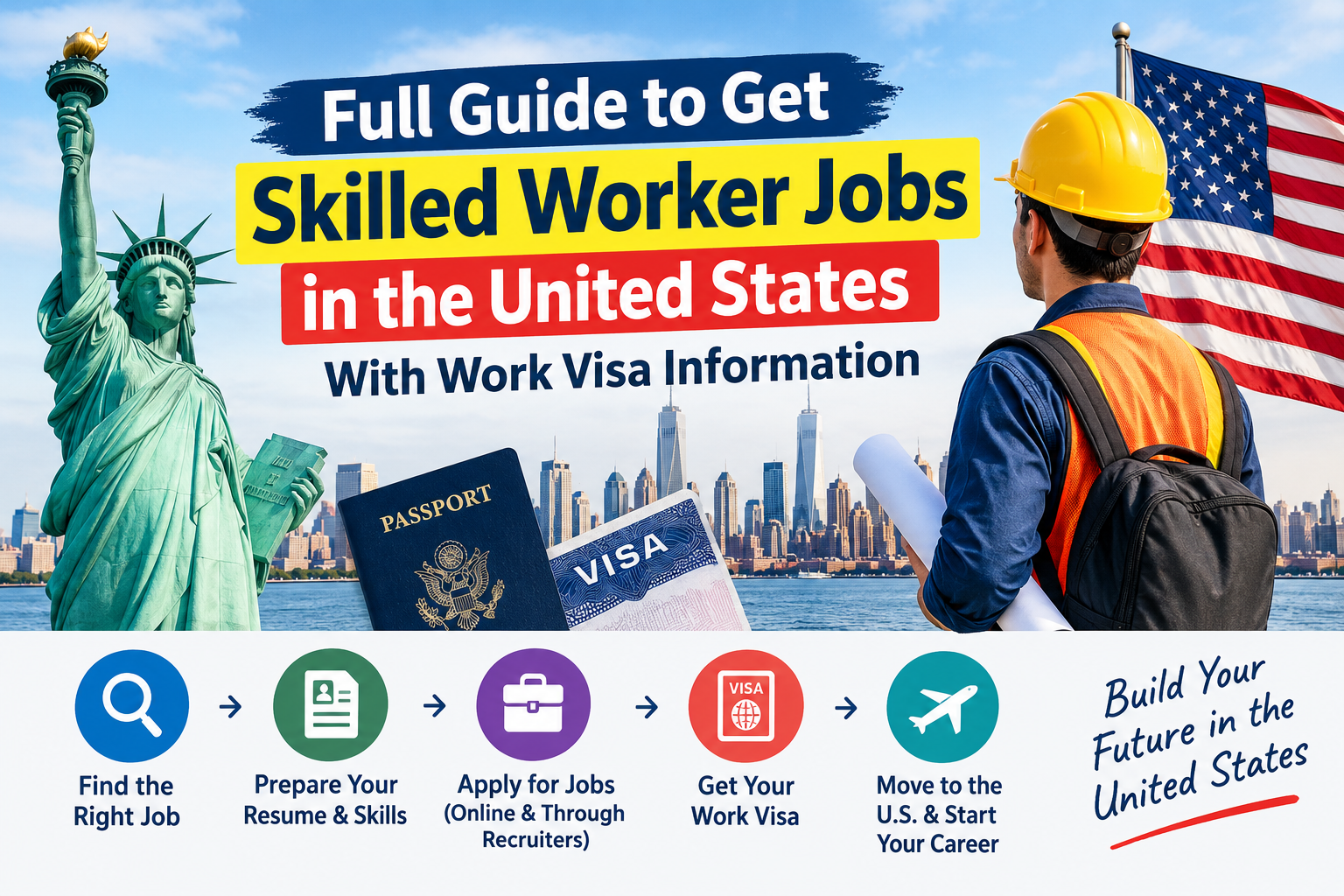
    Full Guide to Get Skilled Worker Jobs in the United States With Work Visa Information

    The United States continues to attract skilled professionals from around the world because of its large job market, career opportunities, competitive salaries, and demand for specialized talent. For international workers, however, getting a job in the United States is different from simply applying for a position. In many cases, you also need the correct U.S. work authorization or employment visa.

    The good news is that skilled professionals in technology, engineering, healthcare, finance, education, business, and other specialized fields may have several possible employment-based immigration or temporary work options.

    This guide explains how international candidates can search for skilled worker jobs in the United States, understand common work visa categories, prepare for applications, and improve their chances of finding an employer willing to sponsor them.

    Important: U.S. immigration rules can change. Always check the latest information from the U.S. Department of State and U.S. Citizenship and Immigration Services (USCIS) before making immigration or employment decisions.

    What Are Skilled Worker Jobs in the United States?

    Skilled worker jobs generally require specialized education, technical knowledge, professional experience, training, or a combination of these qualifications.

    Examples include:

    • Software Developer
    • Data Analyst
    • Cybersecurity Specialist
    • Cloud Engineer
    • Mechanical Engineer
    • Electrical Engineer
    • Civil Engineer
    • Financial Analyst
    • Accountant
    • Healthcare Professional
    • Project Manager
    • Marketing Specialist
    • Business Analyst
    • UX/UI Designer
    • Research Scientist
    • IT Support Specialist
    • Artificial Intelligence Specialist
    • Web Developer
    • Teacher or Education Professional

    The exact qualifications required depend on the occupation and employer. Some positions require a bachelor’s or master’s degree, while others place greater emphasis on professional certifications, technical skills, and work experience.

    Why Work in the United States?

    The United States has one of the world’s largest employment markets and offers opportunities across many industries.

    Some common reasons international professionals consider U.S. employment include:

    1. Large Job Market

    Major industries such as technology, healthcare, finance, manufacturing, logistics, education, and professional services regularly employ specialized workers.

    2. Career Development

    Working for a U.S. company can provide exposure to international projects, advanced technologies, professional networks, and specialized training.

    3. Competitive Compensation

    Salary levels vary significantly depending on the occupation, location, experience, and employer. Candidates should research compensation for their specific profession rather than relying on general salary estimates.

    4. International Experience

    U.S. work experience can be valuable for professionals building an international career.

    How to Find Skilled Worker Jobs in the United States

    Finding an employer that can legally employ an international worker requires a targeted job-search strategy.

    Step 1: Identify Your Skills

    Start by creating a list of your strongest professional skills.

    For example, a digital marketing professional might have experience with:

    • Google Ads
    • Meta Ads
    • SEO
    • Analytics
    • Content marketing
    • Email marketing
    • Conversion optimization

    A software professional might have skills such as:

    • Python
    • JavaScript
    • Java
    • Cloud computing
    • Database management
    • Artificial intelligence
    • Cybersecurity

    Understanding your strongest skills helps you target jobs where your experience matches the employer’s requirements.

    Step 2: Prepare a U.S.-Style Resume

    Your resume should be clear, professional, and focused on measurable achievements.

    Instead of simply writing:

    “Managed digital marketing campaigns.”

    Consider:

    “Managed paid advertising campaigns and improved conversion performance through data-driven optimization.”

    Where possible, include measurable results such as revenue growth, cost reductions, conversion improvements, traffic increases, or project outcomes.

    Your resume should normally include:

    • Professional summary
    • Relevant skills
    • Employment history
    • Education
    • Certifications
    • Technical skills
    • Major achievements
    • Relevant projects

    Avoid adding unnecessary personal information.

    Step 3: Search for Jobs That Mention Sponsorship

    One of the most important steps for international candidates is identifying employers that are willing to hire foreign workers.

    When searching online, try keywords such as:

    • “visa sponsorship jobs USA”
    • “H-1B sponsorship jobs”
    • “international candidates jobs USA”
    • “work visa sponsorship”
    • “visa sponsorship available”
    • “sponsorship available for qualified candidates”

    You should also read the employer’s job description carefully. Some companies may explicitly state whether they sponsor work visas.

    Step 4: Use Professional Job Platforms

    International candidates can search through major employment platforms and company career pages.

    Useful search methods include searching for a specific occupation together with “visa sponsorship.”

    For example:

    Software Engineer + H-1B sponsorship

    or

    Data Analyst + visa sponsorship

    or

    Mechanical Engineer + U.S. sponsorship

    Do not rely only on job boards. Check the career pages of companies that operate in your industry.

    Step 5: Build a Professional LinkedIn Profile

    A strong LinkedIn profile can help recruiters discover you.

    Your profile should clearly show:

    • Your professional title
    • Years of experience
    • Major skills
    • Industry experience
    • Certifications
    • Education
    • Major achievements
    • Portfolio or project links

    Use a professional headline that clearly explains what you do.

    For example:

    Digital Marketing Specialist | Google Ads | Meta Ads | SEO | Performance Marketing

    Common U.S. Work Visa Options

    There is no single “U.S. work visa” that applies to every skilled professional. The appropriate category depends on the job, qualifications, employer, nationality, and circumstances.

    The U.S. Department of State lists several temporary employment categories, including H-1B, H-1B1, H-2A, H-2B, H-3, L, O, P, and Q categories.

    H-1B Visa

    The H-1B classification is commonly associated with specialty occupations.

    According to the U.S. Department of State, H-1B applicants generally need at least a bachelor’s degree or equivalent experience in the specialty occupation.

    Examples of fields that may include H-1B positions are:

    • Technology
    • Engineering
    • Data and analytics
    • Architecture
    • Specialized business roles
    • Scientific occupations

    However, not every job in these fields qualifies. The position itself must meet the applicable requirements for a specialty occupation.

    H-1B cases also involve employer filings and USCIS procedures, and certain H-1B cases are subject to annual numerical limits.

    H-1B1 Visa

    H-1B1 is a separate category for qualifying professionals from Chile and Singapore working in specialty occupations. It has different procedures from the standard H-1B category.

    L-1 Visa

    The L category can apply to certain employees transferring from an overseas office of a qualifying company to a related U.S. entity.

    It can cover qualifying managers, executives, or employees with specialized knowledge. The employee generally must have worked for the qualifying organization abroad for at least one year within the preceding three years.

    For professionals working for multinational companies, an internal transfer can therefore be one possible route to U.S. employment.

    O Visa

    The O category is designed for individuals with extraordinary ability or achievement in areas such as science, education, business, athletics, and the arts, subject to the applicable requirements.

    This category may be relevant to professionals with significant achievements, recognition, publications, awards, or other evidence that meets the legal standard.

    H-2A and H-2B

    H-2A is associated with temporary agricultural work, while H-2B covers certain temporary or seasonal non-agricultural employment. Eligibility depends on the specific requirements and nationality rules applicable to the program.

    These categories are different from professional skilled-worker routes such as H-1B.

    Employment-Based Permanent Immigration

    Some foreign workers may also qualify for employment-based immigrant pathways.

    For example, employment-based categories can include workers with particular professional qualifications or skills and may involve employer sponsorship and labor certification requirements, depending on the category.

    Because permanent employment-based immigration is different from a temporary work visa, candidates should carefully determine which immigration pathway applies to their situation.

    How Employer Sponsorship Generally Works

    For many temporary employment categories, the U.S. employer plays an important role in the immigration process.

    The U.S. Department of State explains that most temporary worker visa applicants need an approved petition filed by the prospective employer, with USCIS reviewing the petition.

    A simplified process can look like this:

    Find a qualifying job → Receive an offer → Employer determines appropriate visa category → Employer completes required petition process → USCIS decision → Visa application, if required → Consular processing/interview → Travel and employment according to visa terms

    The actual process can differ considerably depending on the visa category.

    Documents You May Need

    Depending on your visa category and individual circumstances, you may need documents such as:

    • Valid passport
    • Resume
    • Employment offer
    • Educational certificates
    • Degree documents
    • Professional certifications
    • Employment experience letters
    • Previous immigration documents
    • Employer petition information
    • Visa application confirmation
    • Supporting financial or personal documents where applicable

    For petition-based temporary workers, the Department of State indicates that applicants should have the petition receipt information and required visa application documents available.

    Visa Interview and Application Process

    Once the required petition has been approved for a petition-based category, the applicant may proceed with the visa application process when applicable.

    This can involve completing Form DS-160, paying the applicable visa fee, scheduling an interview when required, and preparing supporting documents.

    Visa appointment availability varies by location and visa category, so applicants should check the current information for the U.S. embassy or consulate where they will apply.

    An approved petition does not automatically guarantee visa issuance. The Department of State specifically notes that petition approval does not guarantee that a visa will be issued.

    How to Improve Your Chances of Finding a Sponsored Job

    There is no guaranteed method for obtaining a sponsored U.S. job, but you can make your search more focused.

    Focus on High-Demand Skills

    Develop skills that are relevant to your industry and supported by real work experience.

    For technology professionals, this might include cloud computing, cybersecurity, software development, data engineering, or AI-related skills.

    For business professionals, useful areas may include analytics, performance marketing, finance, operations, or specialized industry knowledge.

    Gain Relevant Experience

    Employers generally want candidates who can demonstrate that they can perform the job.

    Build experience through:

    • Full-time employment
    • Freelance projects
    • Internships
    • Professional certifications
    • Personal projects
    • Open-source contributions
    • Portfolio work

    Apply Directly to Companies

    Do not depend exclusively on recruiters.

    Create a list of U.S. companies in your industry and regularly check their career pages for relevant openings.

    Network With Professionals

    Professional networking can help you discover opportunities that may not be obvious through standard job searches.

    Connect with:

    • Recruiters
    • Hiring managers
    • Industry professionals
    • Alumni
    • Former colleagues
    • Professionals working at multinational companies

    Beware of Fake Job and Visa Offers

    International job seekers should be especially careful about scams.

    A legitimate employer should provide clear information about the job, compensation, duties, and employment conditions.

    Be cautious if someone:

    • Guarantees a U.S. visa
    • Promises a guaranteed job
    • Demands large upfront payments
    • Requests unusual personal information
    • Uses unofficial email addresses
    • Refuses to provide a written job description
    • Claims that a visa is guaranteed after payment

    The U.S. Department of State’s worker-rights guidance warns temporary workers about exploitation and provides information about workplace rights.

    Never assume that paying someone guarantees a visa or employment.

    A Practical Job Search Plan

    If you want to pursue a skilled-worker opportunity in the United States, follow this simple plan:

    Week 1: Identify your target occupation and visa possibilities.

    Week 2: Update your resume, LinkedIn profile, and portfolio.

    Week 3: Create a list of U.S. companies that hire professionals in your field.

    Week 4: Start applying to relevant jobs and contact recruiters.

    Month 2 onward: Continue applications, networking, skill development, and interview preparation.

    Keep a spreadsheet containing:

    • Company name
    • Job title
    • Application date
    • Recruiter
    • Visa sponsorship information
    • Application status
    • Interview dates
    • Follow-up date

    This can make a long-term international job search much easier to manage.

    Frequently Asked Questions

    Can foreigners get skilled jobs in the United States?

    Yes. Foreign professionals can work in the United States when they qualify for an appropriate employment authorization or visa category and meet the applicable requirements.

    Does every U.S. company provide visa sponsorship?

    No. Sponsorship policies vary between companies and positions. Always check the job description and confirm sponsorship requirements with the employer.

    Is H-1B the only work visa?

    No. The United States has several employment-related visa categories. The appropriate category depends on the nature of the employment and the worker’s qualifications.

    Can I apply for a U.S. job from outside the United States?

    Yes. Many international candidates apply to U.S. employers while living outside the country. If selected, the employer and worker must follow the applicable immigration process before the worker begins employment in the United States.

    Does getting a job guarantee a U.S. visa?

    No. A job offer or approved petition does not automatically guarantee visa issuance. Visa applicants must satisfy the requirements applicable to their visa category.

    Final Thoughts

    Getting a skilled worker job in the United States requires more than submitting applications. International candidates need a strong professional profile, relevant experience, targeted job searches, and an understanding of U.S. employment visa requirements.

    Start by identifying your occupation and skills, create a professional U.S.-style resume, target employers that hire international candidates, and research the visa category that may apply to your circumstances.

    Most importantly, use official U.S. government resources for immigration information because visa rules, procedures, fees, and eligibility requirements can change.

    With careful preparation, realistic expectations, and a consistent job-search strategy, international professionals can better navigate the U.S. employment market and understand the steps involved in pursuing lawful employment.

    Official Resources

    • U.S. Department of State – Employment Visas
    • U.S. Department of State – Temporary Worker Visas
    • U.S. Department of State – Visa Information & Resources
    • U.S. Department of State – Temporary Worker Rights and Protections

    Disclaimer: This article is for general informational purposes and is not legal or immigration advice. Visa eligibility depends on individual circumstances and current U.S. immigration rules.